

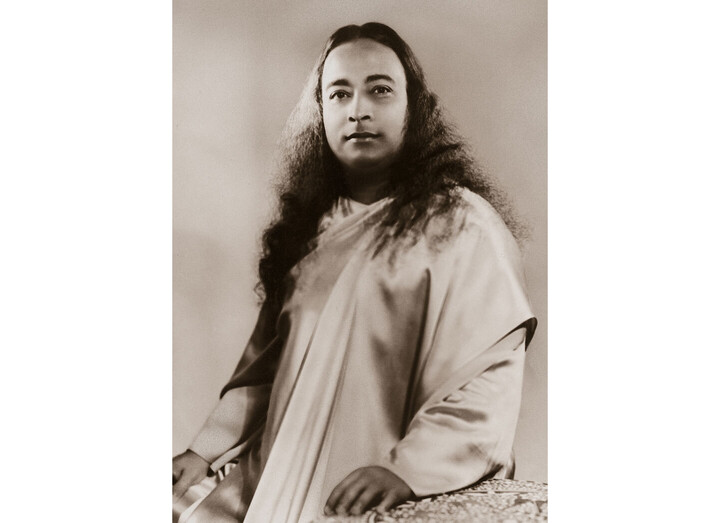
The following is an excerpt from Paramahansa Yogananda’s acclaimed life story, Autobiography of a Yogi, from the chapter “Years in My Master’s Hermitage,” in which he relates many deeply inspiring experiences with his renowned guru, Swami Sri Yukteswar. Shared below is a glimpse of Swami Sri Yukteswar’s elevated spiritual stature and perennial wisdom. In this passage Paramahansaji often refers to Sri Yukteswar simply as “Master,” which is a reverential way to address one’s guru, signifying a soul who has achieved full self-mastery.

My early months with Sri Yukteswar culminated in a useful lesson: “How to Outwit a Mosquito.” At home my family always used protective curtains at night. I was dismayed to discover that in the Serampore hermitage this prudent custom was honored in the breach. Yet the insects were in full residence; I was bitten from head to foot. My guru took pity on me.
“Buy yourself a curtain, and also one for me.” He laughed and added, “If you buy only one, for yourself, all mosquitoes will concentrate on me!”
I was more than thankful to comply. On every night that I spent in Serampore, my guru would ask me to arrange the bedtime curtains.
One night, when a cloud of mosquitoes surrounded us, Master failed to issue his usual instructions. I listened nervously to the anticipatory hum of the insects. Getting into bed, I threw a propitiatory prayer in their general direction. A half hour later, I coughed pretentiously to attract my guru’s attention. I thought I would go mad with the bites and especially the singing drone as the mosquitoes celebrated bloodthirsty rites.
No responsive stir from Master; I approached him cautiously. He was not breathing. This was my first close observation of him in the yogic trance; it filled me with fright.
“His heart must have failed!” I placed a mirror under his nose; no breath vapor appeared. To make doubly certain, for minutes I closed his mouth and nostrils with my fingers. His body was cold and motionless. In a daze, I turned toward the door to summon help.
“So! A budding experimentalist! My poor nose!” Master’s voice was shaky with laughter. “Why don’t you go to bed? Is the whole world going to change for you? Change yourself: be rid of the mosquito consciousness.”
Meekly I returned to my bed. Not one insect ventured near. I realized that my guru had previously agreed to the curtains only to please me; he had had no fear of mosquitoes. By yogic power he could prevent them from biting him; or, if he chose, he could escape to an inner invulnerability.
“He was giving me a demonstration,” I thought. “That is the yogic state I must strive to attain.” A true yogi is able to pass into and maintain the superconscious state, regardless of multitudinous distractions never absent from this earth — the buzz of insects! the pervasive glare of daylight! In the first state of samadhi (sabikalpa), the devotee shuts off all sensory testimony of the outer world. He is rewarded then by sounds and scenes of inner realms fairer than the pristine Eden.1
The instructive mosquitoes served for another early lesson at the ashram. It was the gentle hour of dusk. My guru was matchlessly interpreting the ancient texts. At his feet, I was in perfect peace. A rude mosquito entered the idyl and competed for my attention. As it dug a poisonous “hypodermic needle” into my thigh, I automatically raised an avenging hand. Reprieve from impending execution! An opportune memory had come to me of Patanjali’s aphorism on ahimsa (harmlessness).2
“Why didn’t you finish the job?”
“Master! Do you advocate taking life?”
“No, but in your mind you had already struck the deathblow.”
“I don’t understand.”
“By ahimsa Patanjali meant removal of the desire to kill.” Sri Yukteswar had found my mental processes an open book. “This world is inconveniently arranged for a literal practice of ahimsa. Man may be compelled to exterminate harmful creatures. He is not under a similar compulsion to feel anger or animosity. All forms of life have an equal right to the air of maya. The saint who uncovers the secret of creation will be in harmony with Nature’s countless bewildering expressions. All men may understand this truth by overcoming the passion for destruction.”
“Guruji, should one offer himself a sacrifice rather than kill a wild beast?”
“No, man’s body is precious. It has the highest evolutionary value because of unique brain and spinal centers. These enable the advanced devotee fully to grasp and express the loftiest aspects of divinity. No lower form is so equipped. It is true that a man incurs the debt of a minor sin if he is forced to kill an animal or any other living thing. But the holy shastras teach that wanton loss of a human body is a serious transgression against the karmic law.”
I sighed in relief; scriptural reinforcement of one’s natural instincts is not always forthcoming.
Master, so far as I know, was never at close quarters with a leopard or a tiger. But a deadly cobra once confronted him, only to be conquered by his love. The encounter took place in Puri, where my guru had a seaside hermitage. Prafulla, a young disciple of Sri Yukteswar’s later years, was with Master on this occasion.
“We were seated outdoors near the ashram,” Prafulla told me. “A cobra appeared nearby, a four-foot length of sheer terror. Its hood was angrily expanded as it raced toward us. Master gave a welcoming chuckle, as though to a child. I was filled with consternation to see Sri Yukteswarji engage in a rhythmical clapping of hands.3 He was entertaining the dread visitor! I remained completely quiet, inwardly ejaculating fervent prayers. The serpent, very close to Master, was now motionless, seemingly magnetized by his caressing attitude. The frightful hood gradually contracted; the snake slithered between Sri Yukteswarji’s feet and disappeared into the bushes.
“Why Master would move his hands and why the cobra would not strike them were inexplicable to me then,” Prafulla concluded. “I have since come to realize that our divine guru is beyond fear of hurt from any creature.”
Footnotes:
1 The omnipresent powers of a yogi, whereby he sees, tastes, smells, touches, and hears without the use of outward sensory organs, have been described as follows in Taittiriya Aranyaka: “The blind man pierced the pearl; the fingerless put a thread through it; the neckless wore it; and the tongueless praised it.”
2 “In the presence of a man perfected in ahimsa (nonviolence), enmity [in any creature] does not arise.” Yoga Sutras II:35.
3 The cobra swiftly strikes at any moving object within its range. In most cases, complete immobility is one’s sole hope of safety.

We invite you to learn more about Paramahansa Yogananda’s Autobiography of a Yogi, one of the world’s most acclaimed spiritual classics. This book has touched the hearts and enriched the minds of millions around the globe.
How has Autobiography of a Yogi changed your life? Let us know in the comments!
More from the SRF blog
September 11, 2026
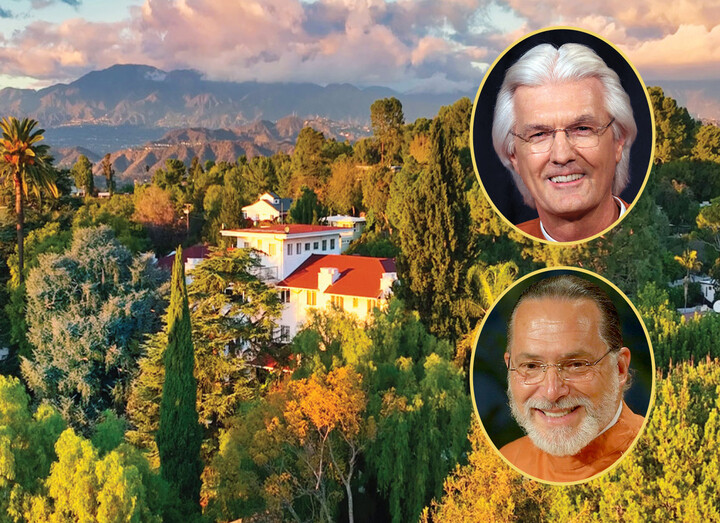
A Vision for the Future of the SRF Mother Center — Special Livestream With Brother Chidananda and Brother Vishwananda on September 12
Read more
Leave a comment
The Autobiographie was my key to happiness.Thirty years ago I ran into the book at a friend's house and once I started to read it, could not wait to continue at night when I found time after a busy day.Lahiri Mahasaya made it possible that regular householders could be instructed in kriya yoga and that is a blessing for me.Each day I make new discoveries on my path and am thrilled with a new outlook on life.Thankfulness to Paramahansa Yogananda and paramgurus is ever present.Jai Guru
Each time I read the Autobiography of a Yogi, I find new meanings... a priceless gem, sparkling at my altar...calming and soothing my soul...ever grateful...
I am preparing to go home. I have read "Autobiography of a Yogi" about 8 times in the last 60 years! Truth! I am closer to Divine Mother and Paramahansa Yogananda a true avatar! Love is the answer and forgiveness and gratitude pave the way for us to come home!
Before I came across Autobiography of a Yogi I thought divine figures like Jesus Christ, Gautama Buddha, and Lord Krishna only walked the earth in past eras. Now I know in our own time God has sent Paramahansa Yogananda and our line of Gurus to help us. The ability to read the words of an Avatar of God’s Love, who spoke and wrote in my native tongue and not an ancient language is a Gift from God!!! Love to Paramahansa Yogananda and to God for sending him!
Thank You Pararmahansa Yogananda for coming into my life and teaching me about God’s Love for my soul
Amen
I read the Autobiography at least once a year.
What I find most interesting is the fact that PY journey is what I was searching for and found in the. Autobiography.
I hope everyone else is on this journey.
I was not unhappy, but often felt unfulfilled, sad, inferior, worried. At a low point I really started questioning life and found Autobiography of a Yogi. Soon after, I subscribed for the SRF Lessons. It's been 19 years now since I started meditating using the techniques taught therein. Now I'm much more peaceful, confident, kind, active, energetic, forgiving, productive. Above all, I feel more fulfilled: the love of God and Gurus is a rare treasure, incomparable in the whole universe. Nothing I say can adequately express even a fraction of the immense gifts I've received.
All happenings here are now absorb'd into Attitude of Gratitude....yogannda reach'd me, and he has never let go. We are bonded forever whatever it takes to complete my learning through Him
It was what I had been looking for all this life.
How has "Autobiography of a Yogi" changed my life? What a grand question! I can't possibly express all my feelings, all my gratitude, all my peace and joy in words. For me, reading "Autobiography" for the first time was like a new birth, the beginning of a whole new life. I consider it the most important book ever written. Jai Guru!
Before Master, I lived in ego ignorance. I thought i protected myself through anger and ego assertiveness. Now I feel glimpses of a transcendent soul capacity such that when I can surrender I am whole and secure in the love of God.
I am particularly blessed. Just two months of receiving my SRF lessons, my life is really changing to know God much better. I am now in lesson three. Thank you Lord and all the Gurus and religious saints for me to receive the SRF lessons
Autobiography of a Yogi inspired me to take up the Lessons.